
Autism vs ADHD in Kids: Understanding the Differences
Published June 24, 2026 · By Nova
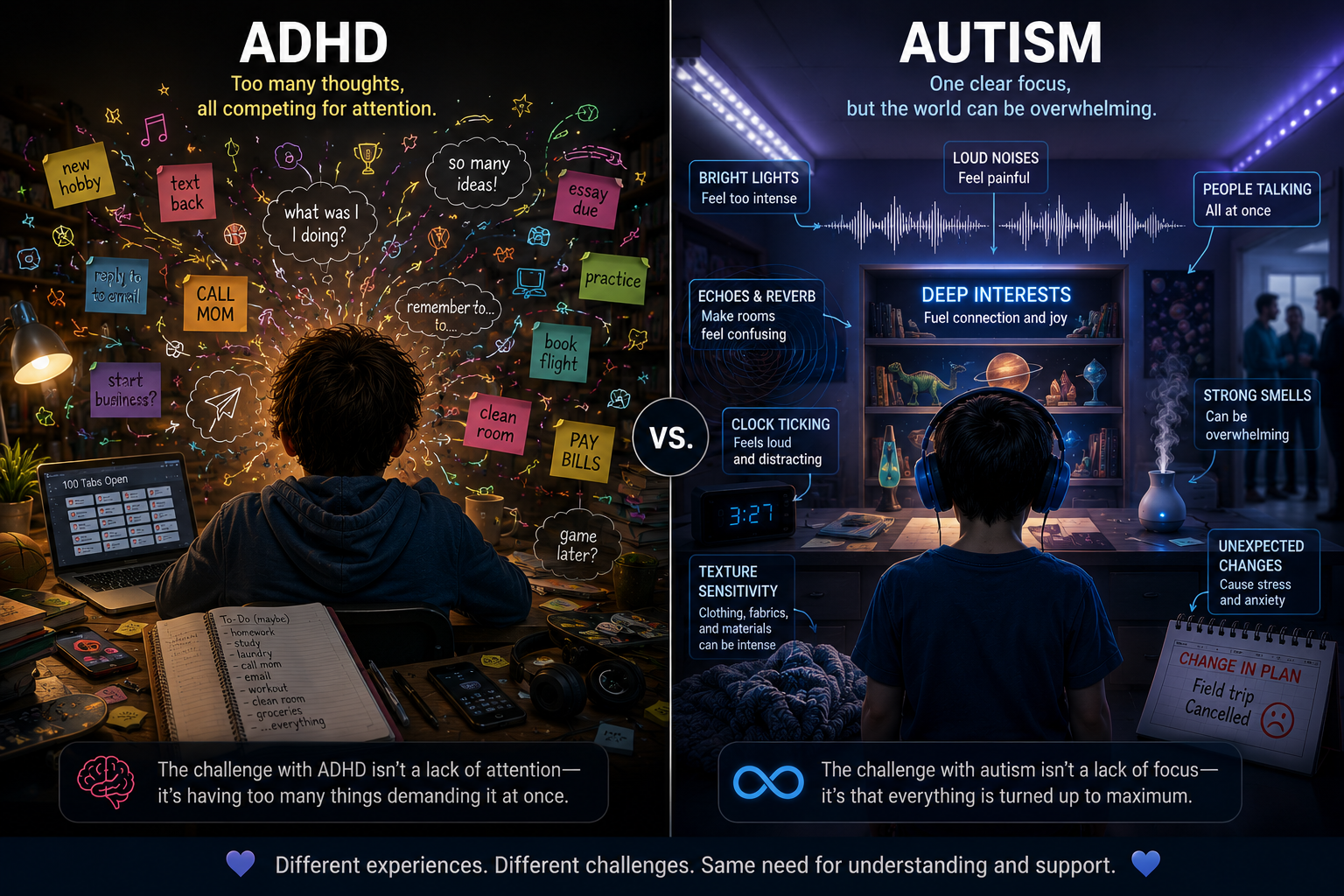
You've noticed certain behaviors in your child; maybe they struggle with social cues, have intense focus on specific topics, or find it difficult to sit still. These observations might lead you down a rabbit hole of research, where you quickly encounter two common neurodevelopmental conditions: autism and Attention-Deficit/Hyperactivity Disorder (ADHD). It's incredibly common for parents to wonder if their child is autistic, has ADHD, or even both.
While autism and ADHD are distinct, they often present with overlapping characteristics, making differentiation challenging without professional guidance. Understanding the core features of each can help you better advocate for your child and seek appropriate support.
Understanding Autism
Autism, or autism spectrum disorder (ASD), is a neurodevelopmental condition characterized by differences in social communication and interaction, and restricted, repetitive patterns of behavior, interests, or activities. The term "spectrum" highlights the wide range of presentations and support needs among autistic individuals.
Key characteristics often include:
- Social Communication Challenges: This can manifest as difficulty with reciprocal conversation, understanding nonverbal cues (like facial expressions or body language), making eye contact, or forming and maintaining relationships. Some autistic individuals may prefer solitary play or struggle with navigating social complexities.
- Repetitive Behaviors and Restricted Interests: This might involve repetitive movements (stimming like hand-flapping or rocking), insistence on routines and sameness, intense or highly focused interests (e.g., memorizing train schedules, deep knowledge of dinosaurs), or unusual sensory sensitivities (aversion to certain sounds, textures, or lights, or seeking out particular sensory input).
- Differences in Play: Autistic children might engage in repetitive play, line up toys, or focus on parts of toys rather than their intended use.
- Emotional Regulation: Some autistic individuals might experience intense emotional responses or difficulty managing frustration.
Understanding ADHD
ADHD is a neurodevelopmental condition marked by persistent patterns of inattention and/or hyperactivity-impulsivity that interfere with functioning or development. It's often categorized into different presentations: predominantly inattentive, predominantly hyperactive-impulsive, or combined presentation.
Key characteristics often include:
- Inattention: Difficulty sustaining attention, easily distracted, often loses things, forgetful in daily activities, struggles to follow through on instructions, and frequently makes careless mistakes.
- Hyperactivity: Fidgets, squirms, has trouble staying seated, runs or climbs excessively (in situations where it's inappropriate), or talks excessively.
- Impulsivity: Difficulty waiting their turn, interrupts others, blurts out answers, or acts without thinking of consequences.
- Emotional Dysregulation: Many individuals with ADHD experience challenges with emotional control, leading to frustration, irritability, or mood swings.
Overlapping Traits: Where They Get Confusing
It's easy to see why these two conditions are often mistaken for each other. Here are some common overlaps:
- Social Challenges: A child with ADHD might interrupt frequently or struggle to follow social rules due to impulsivity, which can look like social communication differences seen in autism. An autistic child might struggle with understanding social reciprocity, leading to similar outcomes.
- Difficulty with Attention: An autistic child might struggle to pay attention to something they're not highly interested in, or be easily distracted by sensory input. A child with ADHD might struggle with attention across many settings due to executive function differences.
- Impulsivity/Disinhibition: While more characteristic of ADHD, some autistic individuals, especially those with co-occurring conditions, can display impulsive behaviors.
- Sensory Sensitivities: While a hallmark of autism, some individuals with ADHD also report sensory challenges, although typically less pervasive.
Key Distinctions to Consider
While only a professional can provide a diagnosis, parents can observe key differences that might point towards one or the other:
- Motivation for Social Interaction: A child with ADHD might want to interact socially but struggles with the social skills (like waiting their turn or listening). An autistic child might struggle with the desire for reciprocal social interaction itself, or find it overwhelming and confusing, leading to withdrawal or different communication styles.
- Nature of Repetitive Behaviors/Interests: In autism, repetitive behaviors (stimming) often serve a self-regulatory purpose or are tied to strong, restricted interests that can sometimes be all-consuming. In ADHD, repetitive behaviors are less common as a core feature, though fidgeting is prevalent as a way to manage excess energy or aid focus.
- Executive Function Differences: While both can impact executive functions (planning, organizing, shifting attention), ADHD is primarily defined by these challenges, particularly in initiating tasks and sustaining attention across various activities and environments, not just those of high interest.
- Communication Style: Autistic individuals often have differences in the qualitative aspects of communication, such as unusual prosody (speech rhythm), unusual vocabulary, or difficulty with conversational back-and-forth. Individuals with ADHD typically have more typical speech patterns but might interrupt or talk excessively.
Can a Child Have Both?
Absolutely, yes! Co-occurrence is very common. Research suggests that a significant percentage of autistic children also meet the criteria for an ADHD diagnosis, and vice-versa. This is why a comprehensive evaluation is so crucial. When both are present, symptoms can be complex, and the intertwining of traits requires careful consideration to develop an effective support plan.
Seeking Professional Guidance
If you have concerns, the most important step is to consult with a developmental pediatrician, child psychologist, or neuropsychologist. They will conduct a thorough evaluation, which may include:
- Detailed developmental history from parents/caregivers.
- Observation of the child in various settings.
- Standardized assessments and questionnaires.
- Interviews with teachers and other professionals involved in the child's life.
Differentiating between autism and ADHD, or recognizing the presence of both, is not about labeling, but about understanding your child's unique way of experiencing the world. With accurate information and appropriate support, you can help your child thrive and reach their full potential.